













Why are solar panels never activated after installation?
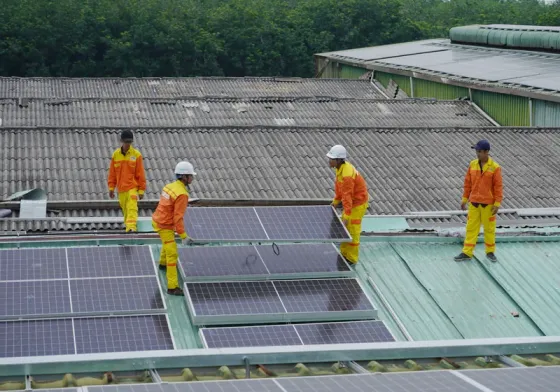
Solar panels never activated after installation are usually waiting on permission to operate (PTO), the electric utility’s written approval to connect the system and switch it on, or on a step PTO depends on, such as a closed building permit, a passed inspection or an approved interconnection application. Your options start with finding which step stalled and demanding in writing that the company responsible finish it, while you put the lender or system owner on notice. Cancellation is possible in some cases and is never automatic.
If your system ran for a while and then stopped, that is a different problem; see solar panels installed but not working.
What is permission to operate, and who grants it?
Permission to operate (PTO) is the utility’s final approval to connect a solar system to the grid and run it. Michigan’s attorney general, in a 2026 complaint, defines it as “the utility’s approval to interconnect and energize the system on the grid,” and adds that without it, a homeowner may have panels on the roof but still lack “a lawful, utility-approved, revenue-producing solar system.”
Two authorities are involved. NREL, a Department of Energy national laboratory, explains that “the local government has the authority to review and approve permits to build,” while “the utility has the authority to approve applications for interconnection to the electrical grid.” State utility commissions set interconnection rules for the utilities they regulate; for California’s investor-owned utilities, that rule is Electric Rule 21. A Department of Energy guide describes the last stage: once the paperwork is approved, the utility “will likely install a net meter (for net-metered systems) and finally issue a permission to operate letter.”
Do not switch the system on yourself. California’s 2022 consumer guide says to “turn on system only after receiving written approval from electricity provider,” and the Arizona utility UniSource states: “Installers shall not operate the system until receiving PTO from UniSource.”
Who does what before a system can be turned on?
California’s 2022 solar consumer guide lays out the usual order, and a Department of Energy guide describes a similar sequence:
- The solar provider “applies for building permit with city or county agency.”
- The installer installs the system “only after receiving city/county permit.”
- A city or county inspector checks it for permit compliance.
- The solar provider submits the interconnection application to the utility.
- The solar provider submits the inspection approval to the utility.
- The utility approves and sends written permission, and only then do you turn the system on.
In this sequence, the installer or solar provider handles nearly every step that can stall. NREL describes the utility’s process as one that “starts when an installer/developer submits an interconnection application,” and an incomplete application gets returned. As for timing, NREL reports that projects take “anywhere from several weeks to several months between contract signing and system operation.”
Why do solar systems stall before activation?
| Where it stalled | How to check | Who should fix it |
|---|---|---|
| Permit never pulled, or never closed | Your city or county building department’s permit records | The installer |
| Inspection failed or never scheduled | The building department | The installer |
| Interconnection application never filed, incomplete or returned | Your utility’s interconnection or solar desk | The installer or solar provider |
| Utility review, meter work or PTO letter pending | Your utility | The utility, under state commission rules |
| Installer closed mid-project | Bankruptcy notices and the claims agent’s site | A financing partner or successor, if one steps in |
Some stalls come from skipped steps. Connecticut’s attorney general alleged in a 2024 suit against SunRun and two sales companies that panels were installed “without obtaining required building or construction permits,” that “The panels have never been activated,” and that “SunRun continues to bill the consumer.” The suit is pending, and those are allegations.
When an installer fails, a bankruptcy court may let someone else finish. The August 7, 2026 order converting Freedom Forever’s case to Chapter 7 authorized its financing partners to exercise “step-in rights to complete open solar installation projects” and to act with “the authorities having jurisdiction, utilities, and other relevant third parties” on those projects. Sunnova’s customer page says SunStrong is working with GoodLeap “to facilitate completion of certain in-progress installations,” with questions to [email protected]. Our page on what happens when the installer goes out of business covers unfinished jobs.
Why are you paying for a system that isn’t on?
Because some lenders start the payment clock at installation. GoodLeap says “First payment dates are set after your project is installed,” and Sunlight Financial’s example borrower makes her “first payment 60 days after her system is installed.” Read your own loan agreement as well: the CFPB’s 2024 solar financing report observes that “Some solar loan agreements note that the consumer’s financial obligation does not depend on the system’s performance.”
Michigan’s attorney general alleges that the funding ran ahead of the work. Its suit over Climax Solar says lenders “released substantial funds based on paperwork and interim project milestones before the systems were completed, connected to the electrical grid, or approved by the utility company to operate,” and that consumers reported panels “installed but not connected, turned on, producing, permitted, inspected, or approved for PTO” while loan payments had started or lender funds had already been released; those claims are pending and unproven.
With a PPA, check the bill against production. The EPA describes a solar PPA as “a performance-based arrangement in which the host customer pays only for what the system produces.” A lease payment is usually set by the contract, and the CFPB says many rise each year by a predetermined amount, so read what your lease says about payments before activation.
Keep paying while you press for activation, and get professional advice before you change any payment. Missed payments carry their own consequences, which our page on what happens if you stop paying explains.
What should you demand, and from whom?
Put each request in writing, ask for a written answer by a date, and keep copies. California’s guide tells buyers to ask before signing, “roughly how long will it take for my electricity provider to send me written approval to turn my system on?” If the installer answered that in writing, quote its answer back.
- From the installer: the permit number and status, the inspection result, the date it submitted the interconnection application and the utility’s response, copies of all of them, and a written completion date.
- From the utility: whether it has an interconnection application for your address, what is missing, and what happens next.
- From the building department: the permit and inspection record for your address.
- From the lender: written notice that the system has no PTO, a copy of any completion certificate or milestone document it relied on to fund the loan, and the name of the department that handles installer disputes.
- From a lease or PPA company: activation under the contract, and a correction of any charges for power the system never produced.
Keep the proposal, ads, text messages and financing disclosures from the sale. If a salesperson told you the system would be running by a certain date, that promise is evidence, and our dispute documents checklist lists what else to gather.
Where can you complain about a system that was never activated?
Each complaint goes where that company is regulated. Your state utility commission sets interconnection rules for the utilities it regulates, so a complaint about how a regulated utility handled your application belongs there. Treasury says to find your state’s utility consumer advocate “at nasuca.org/members.” The installer answers to your state contractor licensing board: the CPUC itself says the Contractors State License Board, “not the CPUC,” licenses and regulates solar contractors, and it sends complaints about “poor workmanship, deception, or fraud” to that board. In Texas, after notice and a hearing that finds a violation of the state’s solar retailer law, regulators may “order the cancellation of an agreement” and a refund (Occ. Code 1806.207). Complaints about the loan go to the CFPB, and lease or PPA complaints go to your state attorney general and the FTC. Our guide to filing a complaint against a solar company covers each one.
Can you cancel a solar contract if the system was never activated?
Sometimes, and never automatically. It depends on the contract type, the dates, your state’s law and the facts. Check whether the contract set a completion or activation deadline, and what it lets you do if the company misses it. A system that was never finished can support a breach of contract claim against the installer, and if a loan paid for it and carries the FTC Holder Rule notice, any holder “IS SUBJECT TO ALL CLAIMS AND DEFENSES WHICH THE DEBTOR COULD ASSERT AGAINST THE SELLER,” with recovery that “SHALL NOT EXCEED AMOUNTS PAID BY THE DEBTOR HEREUNDER.” Our page on canceling after installation covers the routes in detail.
What should you do, in order?
1. Inside a cancellation window? Some state windows run longer than the federal three business days, so check the state table and the deadline tool. If one is open, cancel in writing by the method the contract and the law require, and send the lender a copy the same day.
2. Identify your contract and every company. Find your contract type (cash, loan, lease, PPA or PACE) and list the installer, lender, loan servicer, warranty provider and utility; the first four may be four different companies.
3. Ask in writing, and complain for free. Send the demands above and keep every reply. If you bought the system, the FTC’s advice is: “If you have a problem with a system you bought, try to resolve it with the company first,” and, if that fails, to report it to the FTC and your state attorney general. For the loan, the CFPB’s complaint page asks before you file, “Have you tried reaching out to the company?” Lease and PPA customers can rely on the joint statement in which Treasury, the CFPB and the FTC “encourage consumers that believe they have been a victim of unfair or deceptive practices to file a complaint with CFPB, FTC, or their relevant state consumer protection office.”
Disclosure: Candid Yak works with Titan Advocacy Group, a solar consumer advocacy firm, and may be paid when readers hire it.
4. If they refuse, get a case review. A system that is late is a bad outcome; a system the company won’t finish, while you pay for it, can be a contract violation, and a pitch that promised a working system by a date the paperwork never mentions can be misrepresentation. When the installer, lender or system owner refuses in writing and your documents show a gap between what you were promised and what you signed, a firm that offers a free case review can sort out which it is. Choose one that:
- reads your contract, loan papers and permit records before it quotes anything, and tells you when a free route is still open;
- tells you which attorney licensed in your state will handle the file, so you can look the lawyer up with the state bar;
- puts its fee in writing before you pay anything, and says what happens to that fee if the lender turns you down;
- never tells you to stop paying your loan, lease or PPA;
- never promises an outcome and never claims a link to your installer or lender.
See solar cancellation companies and hiring a solar attorney.
5. Other routes. If a financing partner or successor offers to finish the job, get its plan and dates in writing. A lease or PPA buyout or a loan payoff or refinance can end the contract on its own terms, and the main guide covers every route.
Disclosure: Candid Yak works with Titan Advocacy Group, a solar consumer advocacy firm, and may be paid when readers hire it. This page’s author, Kira Fairbank, is a manager at Vacation Ownership Consultants, a timeshare exit firm.
This is general information, not legal advice. Whether a stalled activation lets you cancel or recover payments depends on your contract’s completion terms, your loan or lease, and your state’s law. Put those documents in front of an attorney licensed in your state before you send a cancellation notice, sign a release, or change any payment.
Sources
- Complaint, Michigan v. Orbit Marketing LLC (Climax Solar) et al., W.D. Mich. No. 1:26-cv-02084 - Michigan Attorney General, July 15, 2026
- AG Nessel Files Lawsuit Against Solar Company, Financial Institutions for Alleged Deceptive Scheme - Michigan Attorney General, July 15, 2026
- Step 4: Project Implementation - U.S. Department of Energy Office of Indian Energy, January 2016
- A Retrospective Analysis of Distributed Solar Interconnection Timelines and Related State Mandates, NREL/TP-6A20-81459 - National Renewable Energy Laboratory, January 2022
- Residential and Small Commercial Solar PV and Storage Permitting, Inspection, and Interconnection Timelines (2017 to 2023), NREL/TP-6A20-92539 - National Renewable Energy Laboratory, November 2025
- Electric Rule 21 - California Public Utilities Commission, checked October 2026
- California Solar Consumer Protection Guide, Version 3 - California Public Utilities Commission, March 2022
- California Solar Consumer Protection Guide (web page) - California Public Utilities Commission, checked October 2026
- Residential Interconnection - UniSource Energy Services, checked October 2026
- Frequently Asked Questions - GoodLeap, checked October 2026
- Consumer portal FAQs - Sunlight Financial, checked October 2026
- Solar Financing Market Issue Spotlight - Consumer Financial Protection Bureau, August 2024
- Attorney General Tong Sues SunRun - Connecticut Attorney General, July 19, 2024
- Attorney General Tong Announces New Developments to Hold Solar Industry Accountable - Connecticut Attorney General, March 17, 2026
- Solar Power Purchase Agreements - U.S. Environmental Protection Agency
- Order Converting Chapter 11 Cases to Chapter 7, In re Freedom Forever LLC, D. Del. No. 26-10522, Docket No. 533 - U.S. Bankruptcy Court, August 7, 2026
- Freedom Forever bankruptcy converted to Chapter 7 liquidation, key dates set - pv magazine USA, September 9, 2026
- Sunnova Closure and Support Resources - Sunnova, updated November 2, 2025
- Solar for Consumers FAQ - California Public Utilities Commission, March 2025
- Consumer Advisory: Solar Energy Scams are Against the Law - U.S. Department of the Treasury, August 2024
- Texas Occupations Code Chapter 1806, Residential Solar Retailers (section 1806.207) - Texas Legislature
- Solar Power for Your Home - FTC Consumer Advice, April 2022
- Submit a complaint - Consumer Financial Protection Bureau, checked October 2026
- Treasury, CFPB, and FTC Announce Steps to Protect Residential Solar Consumers (JY2522) - U.S. Department of the Treasury, August 7, 2024
- 16 CFR Part 433, Preservation of Consumers' Claims and Defenses (Holder Rule) - eCFR, current October 2026