













Who pays for roof damage from solar panels?
Roof damage from solar panels is first a claim against whoever did the work or owns the equipment: the installer, under its workmanship warranty and your contract, if you own the system, or the company that owns the panels if you signed a lease or power purchase agreement (PPA). If that company refuses or has closed, look next at the installer’s contractor license and any state recovery fund, your homeowners insurance, and, for a loan the installer arranged, the lender, up to what you have paid on the loan.
No federal rule decides who pays for a leak; your contract, your state’s law and the cause of the damage do. A refused repair can become a contract dispute, and cancelling the solar contract is never automatic.
| Your situation | Claim first against | What backs the claim |
|---|---|---|
| You own the system and the installer is operating | The installer | Its written workmanship warranty and your installation contract |
| Lease or PPA | The company that owns the panels | The contract’s maintenance and repair terms |
| The installer closed, and it arranged your loan | The lender | The Holder Rule notice in the loan; recovery “SHALL NOT EXCEED AMOUNTS PAID BY THE DEBTOR HEREUNDER” |
| The installer closed, in Arizona or Nevada | The state recovery fund | A licensed contractor’s violation, within the fund’s limits |
| Storm or fire damage | Your insurer, and the system owner on a lease or PPA | Your policy, and the contract’s terms on disasters |
Why do solar installations cause roof leaks?
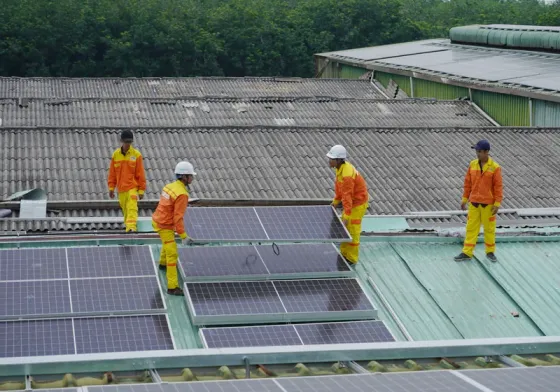
The National Renewable Energy Laboratory (NREL) says a PV installation “can increase a roof’s potential for leaks and damage,” because of added foot traffic and attachments through the roof membrane. Its training for local permitting and inspection staff lists “Roof penetrations are not flashed or sealed” among the major problem areas. A roof penetration is a hole drilled through the roof covering to anchor the racking; flashing is the sealed piece that keeps water out around it.
Not every leak traces to the solar crew. California’s consumer guide says “If you plan to replace your roof soon, you should replace it before installing a rooftop solar system.” Whose claim it is depends on the cause, so get the cause in writing from someone who doesn’t work for the installer.
Which warranty covers roof damage from solar panels?
A workmanship warranty is the installer’s written promise about the quality of its own labor, including how it attached the system to your roof.
A manufacturer’s warranty covers defects in the equipment itself, such as the panels and inverters.
A roof penetration warranty is a promise about the holes and seals at the attachment points. Whether your contract includes one, who gives it, and how long it lasts depends on the contract; we found no government source describing a standard version.
The Magnuson-Moss Warranty Act reaches written warranties on consumer products, and the FTC’s rule says “warranties on services are not covered.” A promise about installation labor alone is generally enforced as a contract under state law. Equipment warranties may not pay for labor on your roof either: Enphase’s microinverter warranty “does not include any cost of labor” to uninstall or reinstall its products, and SolarEdge’s leaves that labor to the buyer unless SolarEdge agrees otherwise in writing.
The FTC tells solar shoppers to get bids that state the warranties for the equipment “and the installation workmanship,” and its general warranty advice says that if a salesperson promises free repairs, “get the promise in writing.”
On a lease or PPA, look to the owner. Treasury’s lease guide says “The leasing company owns the system and is generally responsible for system maintenance.” Fannie Mae’s Selling Guide says that for a home with leased panels or a PPA to qualify for a mortgage it buys, the agreement must make the equipment owner responsible for damage from “installation, malfunction, manufacturing defect, or the removal of the solar panels.” Not every contract has that clause, so quote the repair terms in yours.
How do you document roof damage after solar installation?
- Photograph and date everything from inside: ceiling stains, wet insulation, the attic under the array. Stay off the roof.
- Limit further damage and keep every receipt.
- Get an independent written inspection from a licensed roofer that names the cause and where the leak sits relative to the solar attachments.
- Request the permit and inspection record from your city or county building department.
- Notify the installer, or the panel owner, in writing. Cite the warranty or contract section, ask for repair by a date, and copy the lender. The FTC says to send such letters by certified mail with a return receipt, and California’s contractor board says to save a copy of your letter for any complaint.
- Log every call, visit and promise, with dates and names.
Don’t sign a release or agree to panel removal until the terms, including who restores the roof, are in writing. The dispute documents checklist covers the rest of the file.
Is the installer licensed, and does your state have a recovery fund?
Treasury tells consumers to “Check the contractor’s history with state consumer agencies and state licensing boards.” In some states the license also opens a recovery fund.
California. The CPUC says the Contractors State License Board (CSLB), “not the CPUC,” regulates solar contractors and takes poor-workmanship complaints on its solar complaint form. The CSLB acts on violations for up to four years, and state law allows 10 years for complaints about latent structural defects. It warns that “The purpose of a CSLB investigation is not to obtain restitution.”
Arizona. A complaint to the Registrar of Contractors must be filed within two years after the project’s completion.
Texas. Contracts signed on or after September 1, 2025 must name the licensed electrical contractor who will install the system (or list the ones who may) and say who obtains permits and utility approval. The Texas Department of Licensing and Regulation takes complaints.
| State | Fund | Limits | What to know |
|---|---|---|---|
| Arizona | Residential Contractors’ Recovery Fund | $30,000 per claimant; $200,000 per contractor license | Claim against the contractor’s license bond first. The contractor must have held a residential license, and you must own and live in, or plan to live in, the home |
| Nevada | Residential Recovery Fund | $40,000 per claim; per contractor, $750,000 or 20% of the account balance, whichever is less | Apply within four years after the work was completed. Owner-occupied single-family homes only |
| Utah | Residence Lien Recovery Fund | No payments | It covered subcontractor liens, and the state says “Homeowners cannot receive payment from the Fund.” Declared depleted in June 2026 |
Will homeowners insurance pay for the roof?
Treasury’s purchase guide says: “Find out if your solar system or panels are covered under your homeowner’s insurance policy.” California’s guide tells buyers to ask whether insurance comes with the system, and Treasury’s lease guide asks what happens “if the system is damaged by a storm, fire, or natural disaster.” We found no state insurance regulator guidance on how policies treat solar installation damage, so call your insurer, ask in writing, and read your policy.
What if the installer is gone?
The installer, the lender, the loan servicer and the warranty provider can be four different companies, and a loan from a separate lender doesn’t end when the installer does. The CFPB’s 2024 report observes that some solar loan agreements say the borrower’s obligation “does not depend on the system’s performance.” Michigan’s attorney general alleges that after Climax Solar’s bankruptcy, some financing companies kept treating debts as collectible “even though Climax was no longer available to complete installations or provide repairs.”
The Holder Rule is an FTC rule that puts a notice in seller-arranged consumer loans letting the borrower raise claims against the seller with whoever holds the loan. The notice says the holder “IS SUBJECT TO ALL CLAIMS AND DEFENSES WHICH THE DEBTOR COULD ASSERT AGAINST THE SELLER,” and that recovery “SHALL NOT EXCEED AMOUNTS PAID BY THE DEBTOR HEREUNDER.” Look for it in your loan contract. The FTC said in 2022 that the cap doesn’t stop state law from awarding attorneys’ fees against a loan holder. No federal agency has applied the rule to a lease or PPA. See when the installer disappears and when a solar company goes bankrupt.
Who pays when the panels come off the roof?
For a reroof, your contract decides it. If a lender removes panels after default, UCC 9-604 requires it to reimburse owners and lienholders of the real estate “other than the debtor” for damage from the removal, so the UCC gives the borrower no right to roof repairs, though a contract can. At the end of a lease, the FTC says the company “must remove the system and put your roof back in its original condition,” while Treasury says you may be able to buy the system instead; your contract settles which applies.
Can an arbitration clause send a roof claim out of court?
Courts have gone both ways. In Cabatit v. Sunnova, a lease case over alleged roof damage, a California appeals court refused to enforce the clause as unconscionable. In Pearson v. Sunnova, where the homeowners claimed leaks began right after installation, a federal court sent the signer’s claims to arbitration under the clauses in his loan and warranty agreements with Sunnova. See solar arbitration clauses.
What order should you follow?
- Inside a cancellation window? If the contract is recent, send a written cancellation the way the contract and the law require, and copy the lender that day. Windows vary by state and can run longer than three days; see the state table and the deadline tool.
- Identify your contract and every company: cash, loan, lease, PPA or PACE, and the installer, lender, servicer and warranty provider by name.
- Ask in writing, and complain for free. For a system you bought, the FTC says: “If you have a problem with a system you bought, try to resolve it with the company first.” If you aren’t satisfied, it says to report it at ReportFraud.ftc.gov and to your state attorney general. On a lease or PPA, Treasury, the CFPB and the FTC jointly encourage complaints “with CFPB, FTC, or their relevant state consumer protection office.” Add your contractor licensing board, and the CFPB for a loan (how to file).
Disclosure: Candid Yak works with Titan Advocacy Group, a solar consumer advocacy firm, and may be paid when readers hire it.
- If they refuse, and your file shows a gap between the promises made and the contract you signed, get a free case review from an attorney-backed firm. A leak alone is an installation problem; a refused written warranty, or roof promises from the sale that the paperwork left out, can make it a claim. Choose a firm that reads your file before quoting, names the attorney licensed in your state who will handle it, puts its fee and what happens to that fee if the company refuses in writing before you pay, never tells you to stop paying, and never promises a result or claims ties to your installer or lender.
- Other routes: an insurance claim, a recovery fund claim where one exists, and, depending on the contract, a payoff or refinance, a lease buyout, or a transfer when you sell. The main exit guide covers each.
Disclosure: Candid Yak works with Titan Advocacy Group, a solar consumer advocacy firm, and may be paid when readers hire it. This page’s author, Kira Fairbank, is a manager at Vacation Ownership Consultants, a timeshare exit firm.
This is general information, not legal advice. Who pays for a damaged roof turns on your warranty, your contract and your state’s contractor and insurance law, so put those documents in front of an attorney licensed in your state before you send a notice, sign a release, or change any payment.
Sources
- Best Practices for Operation and Maintenance of Photovoltaic and Energy Storage Systems, 3rd Edition, NREL/TP-7A40-73822 - National Renewable Energy Laboratory, December 2018
- Introduction to Residential Rooftop PV Permitting and Field Inspections (SolSmart training) - National Renewable Energy Laboratory, 2025
- California Solar Consumer Protection Guide (web page) - California Public Utilities Commission, checked October 2026
- Solar for Consumers: Frequently Asked Questions - California Public Utilities Commission, April 2025
- Solar Power for Your Home - FTC Consumer Advice, April 2022
- Warranties - FTC Consumer Advice
- 16 CFR 700.1, Products covered (Magnuson-Moss interpretations) - Legal Information Institute
- Businessperson's Guide to Federal Warranty Law - Federal Trade Commission
- Enphase Energy Limited Warranty, IQ Microinverters, effective September 1, 2025 - Enphase Energy
- SolarEdge Limited Product Warranty (January 2026 file, effective April 15, 2026) - SolarEdge
- Consumer Advisory: Solar Energy Scams are Against the Law - U.S. Department of the Treasury, August 2024
- Before You Purchase and Finance Solar Panels - U.S. Department of the Treasury, August 2024
- Before You Sign a Solar Lease Agreement - U.S. Department of the Treasury, August 2024
- Selling Guide B2-3-04, Special Property Eligibility Considerations (Properties with Solar Panels) - Fannie Mae, October 2025
- Filing a Construction Complaint - California Contractors State License Board, checked October 2026
- California Business and Professions Code 7091 - California Legislative Information
- A.R.S. 32-1132, Residential contractors' recovery fund; claimants; eligibility - Arizona Legislature
- A.R.S. 32-1132.01, Actual damages; fund; limitations - Arizona Legislature
- A.R.S. 32-1139, Liability of fund for each residential contractor's license - Arizona Legislature
- A.R.S. 32-1162, Statute of limitations for complaints - Arizona Legislature
- Recovery Fund - Arizona Registrar of Contractors
- Residential Recovery Fund Overview - Nevada State Contractors Board
- NRS Chapter 624, Contractors (NRS 624.480 and 624.510, residential recovery fund) - Nevada Legislature
- Utah's Residence Lien Recovery Fund is Officially Depleted. What now? - Utah Department of Commerce, June 11, 2026
- FAQs for Homeowner or Representing Attorneys, Residence Lien Recovery Fund - Utah Division of Professional Licensing
- Lien trap: Why a safety net for homeowners facing a construction lien despite full payment is going away - KSL.com, June 3, 2026
- Residential Solar Retailers: What's in Effect When - Texas Department of Licensing and Regulation
- Texas Occupations Code Chapter 1806, Residential Solar Retailers - Texas Legislature
- Residential Solar Retailers Knowledge Base (how to file a complaint) - Texas Department of Licensing and Regulation
- 16 CFR Part 433, Preservation of Consumers' Claims and Defenses (Holder Rule) - eCFR, current October 2026
- FTC Issues Advisory Opinion on the Holder Rule and Attorneys' Fees and Costs - Federal Trade Commission, January 20, 2022
- Solar Financing Market Issue Spotlight - Consumer Financial Protection Bureau, August 2024
- AG Nessel Files Lawsuit Against Solar Company, Financial Institutions for Alleged Deceptive Scheme - Michigan Attorney General, July 15, 2026
- UCC 9-604, Procedure if security agreement covers real property or fixtures - Legal Information Institute
- Cabatit v. Sunnova Energy Corp., No. C089576 - California Court of Appeal, Third District, filed December 31, 2020, certified for publication January 29, 2021
- Pearson v. Sunnova Energy International, No. 1:25-cv-00251, Memorandum Opinion - U.S. District Court for the District of Columbia, filed August 14, 2025
- Pearson v. Sunnova Energy International, No. 1:25-cv-00251, docket - Justia Dockets
- Treasury, CFPB, and FTC Announce Steps to Protect Residential Solar Consumers (JY2522) - U.S. Department of the Treasury, August 7, 2024