

















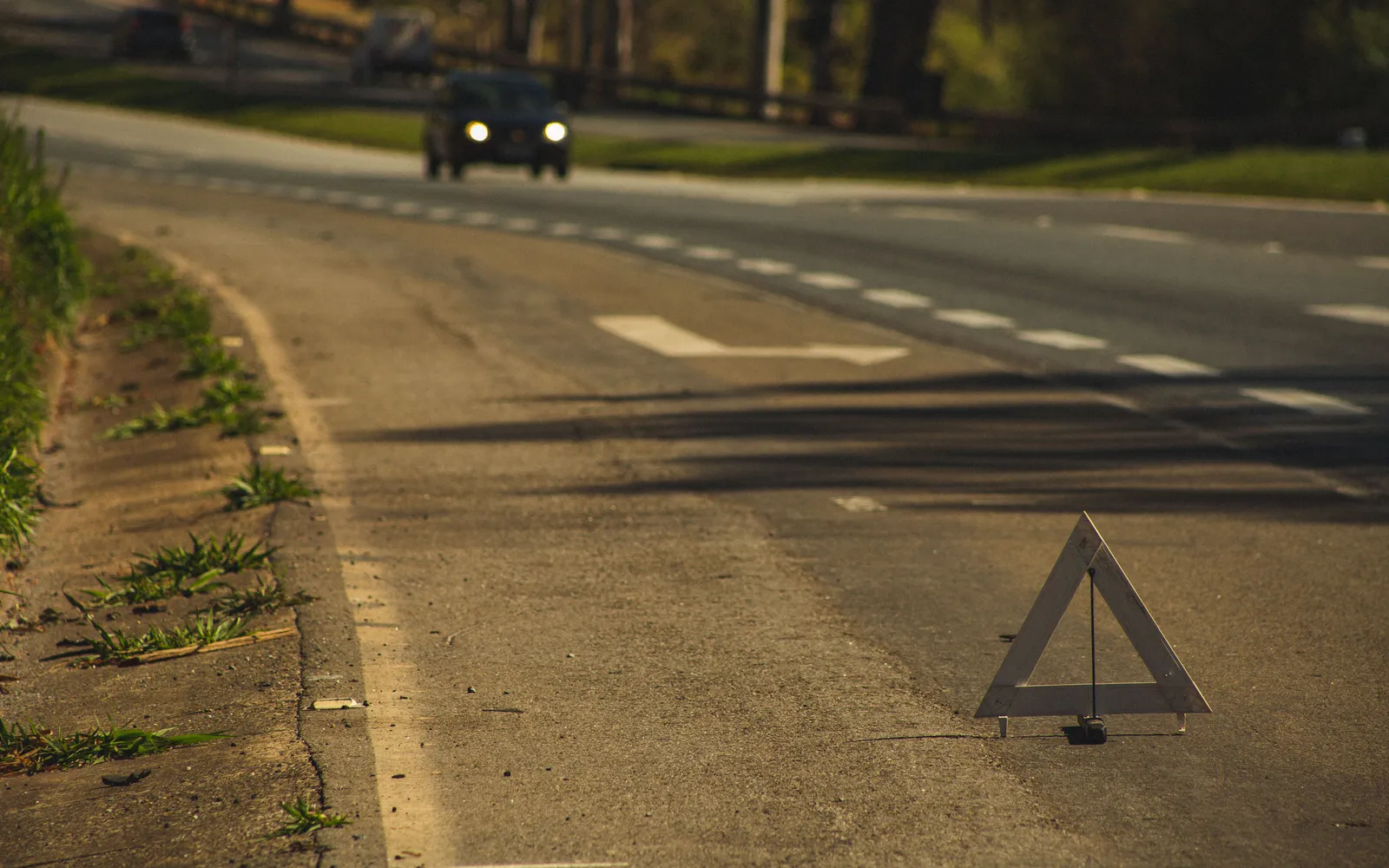
If you drive in Oklahoma, the paperwork after your next fender bender is about to disappear. Starting Sunday, November 1, a crash where nobody’s hurt and only cars got damaged can end with no report at all. Not from the officer. Not from you.
The only record left is whatever you collected at the scene.
The change is House Bill 4143, signed May 12. The Insurance Department sent insurers a bulletin about it on October 20. Most of the change is a price update. An officer’s written collision report used to kick in at $500 of apparent damage. Now it’s $3,000. Your own report to the Department of Public Safety, owed when a crash isn’t settled within six months, moves from $300 to $3,000.
Then comes the sentence that matters, added to both sections word for word: “No report is required when all parties involved agree to exchange information and there is no injury, no death, and no damage to property other than vehicles.”
Read it twice. There’s no dollar figure in it.
A $900 scrape at a stop sign and an $8,000 rear-end collision on the highway get the same treatment, as long as you swapped info, nobody’s hurt and only cars got damaged. The $3,000 line mostly matters when somebody won’t swap information.
Florida did a version of this on October 1, raising the damage level that requires a call to police to $2,000. But Florida still makes the driver send the state a written report within 10 days. We covered that one. Oklahoma dropped the backup report too.
And the number wouldn’t protect you anyway. CCC Intelligent Solutions put the average repairable insurance claim at $4,821 in the first half of 2026, and about 75% of them topped $2,000. Modern bumpers hide sensors. Nearly 30% of repairable appraisals in early 2026 needed a sensor calibration. A crash that looks minor from the curb often isn’t.
So what happens when the other driver’s story changes a week later? Their liability coverage pays for your car only if they’re at fault. With no report, fault comes down to two statements and your photos. The state minimum for property damage is $25,000, per the Oklahoma Insurance Department, and that money only flows if the claim sticks.
Our verdict: cutting cop paperwork for a scraped bumper is fine. Treating “we swapped insurance cards” as the whole job is dumb.
Here’s the move at the scene.
Take photos before anyone moves the cars, if it’s safe. Get both cars, the damage, the plates and the intersection. Photograph the other driver’s license and insurance card, and write down the policy number, not just the company name. Get a phone number from anyone who saw it.
Call the police anyway if anyone is hurt, if a fence or mailbox got hit, or if the other driver won’t hand over their information. The exemption needs every party to agree to exchange info. If you want a report, ask the officer for one.
Call your own insurer the same day, while the details are fresh.
Before any of that happens, check your declarations page. Oklahoma makes you reject uninsured motorist coverage in writing, so find out whether you signed it away. It’s the coverage that protects you when the other driver’s card turns out to be worthless. Then look at your collision deductible, because collision fixes your own car no matter who’s at fault, minus that deductible. Price what a lower one costs with our insurance estimator. More on coverage levels at the auto insurance hub.
One detail for the paperwork fans. Under Section 10-108(C), when someone files a driver report, the Department of Public Safety asks the other parties for information to determine whether they had the required insurance at the time of the crash. Fewer reports means that check runs less often. That’s one more reason to keep your own coverage in order.
How Candid Yak makes money. Some of the products we write about pay us if you apply or sign up through our links. That never changes our verdict, our rankings, or the numbers in this article. We call a bad deal a bad deal whether it pays us or not. Some brands shown in our comparison tools are placeholder examples while we finalize partner agreements, and we label them as such.
Sources
- Enrolled House Bill 4143, amending 47 O.S. Sections 10-108 and 40-102, effective November 1, 2026 (Oklahoma Legislature)
- HB 4143 bill history, approved by Governor May 12, 2026 (Oklahoma Legislature)
- Bulletin No. 2026-04, House Bill 4143, October 20, 2026 (Oklahoma Insurance Department)
- Report: Auto Insurance Total Loss Frequency Climbs, More Drivers Paying for Repairs (Claims Journal, October 15, 2026, on the CCC Crash Course Mid-Year Update)
- Consumer Resource Guide, auto insurance basics (Oklahoma Insurance Department)
- Florida Statutes s. 316.066, Written reports of crashes (Florida Legislature)
- Florida Statutes s. 316.065, Crashes; reports; penalties (Florida Legislature)