











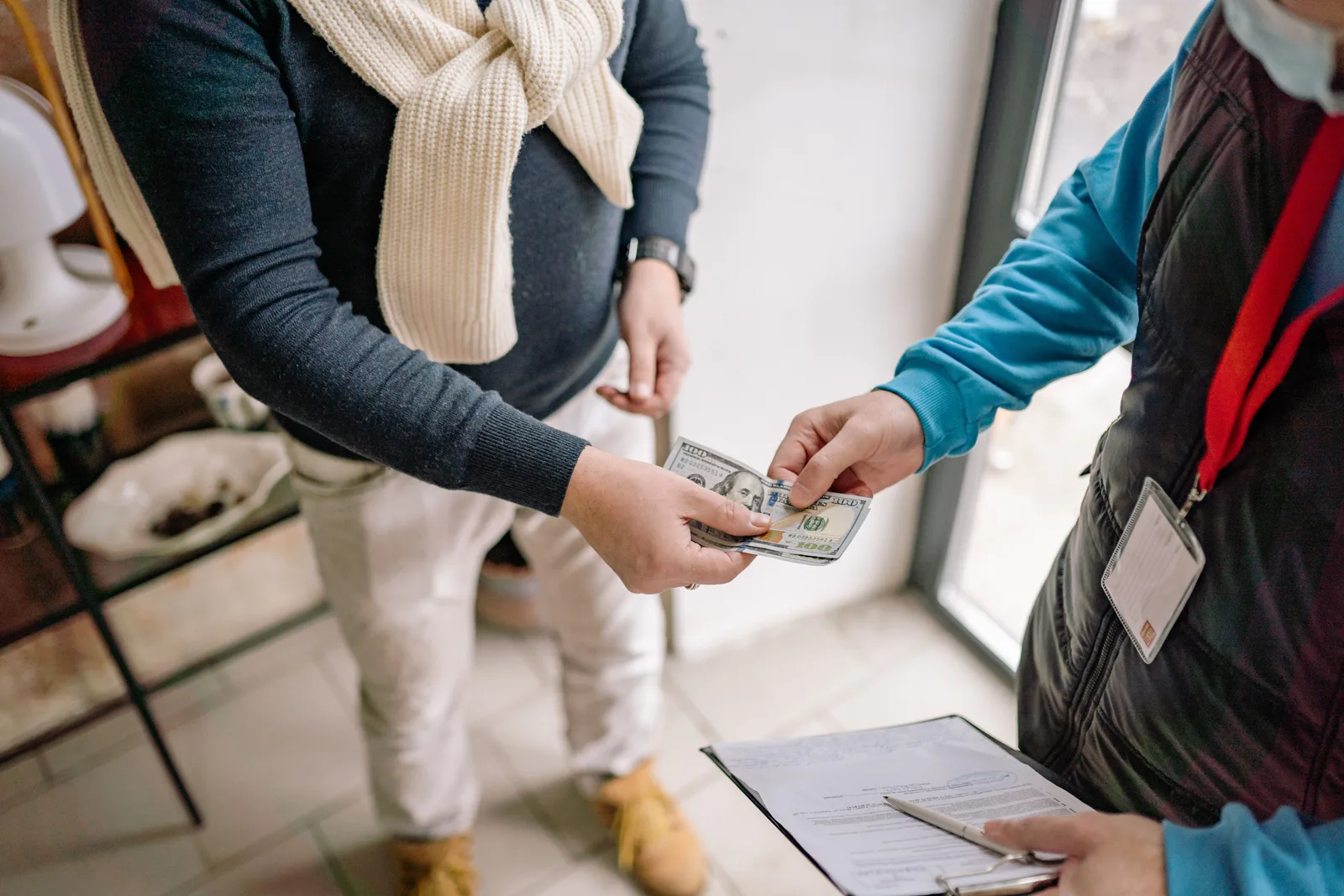
Cash a paycheck, buy a money order, or send money home from a storefront in El Paso, Brownsville, Laredo or Albuquerque, and the counter has to file a federal report on you once the cash hits $1,000. Not $10,000. One thousand, and your ID number goes on the form.
Do the same thing in Phoenix or Tucson and that requirement came off on September 3.
Treasury’s financial crimes unit does this with a Geographic Targeting Order, which drops the normal reporting threshold inside a drawn box on a map for up to 180 days at a time. The current one took effect September 3 and runs through March 1, 2027, and it lists the box ZIP code by ZIP code: Cameron, El Paso, Hidalgo, Maverick and Webb Counties in Texas, plus Bernalillo, Dona Ana and San Juan Counties in New Mexico.
The version it replaced, issued in March, also covered Maricopa, Pima, Santa Cruz and Yuma Counties in Arizona and a list of ZIP codes in Imperial and San Diego Counties in California. None of that is in the renewal. FinCEN gives no reason, and the order does not mention the change at all. You have to read the two documents side by side to see it.
The title on both is “Along the Southwest Border.” Santa Cruz and Yuma Counties actually sit on that border, and they just came off. San Juan County, New Mexico is up in the Four Corners, closer to Colorado than to Mexico, and it stayed on. Bernalillo County is Albuquerque, a couple hundred miles up the interstate. Also still on.
Here’s what they don’t tell you at the counter. This is not the teller being difficult. The order requires the business to verify your identity under the federal ID rules and to write the actual number, your driver’s license or card number, onto the report before the transaction closes. Writing “known customer” is specifically banned. Regular at the same shop for six years? Doesn’t matter, they pull the number every time.
Nothing about that report lands on you. It is a record, not an accusation, and you sign nothing. But it exists for five years, and it starts at a number a lot of working people cross on an ordinary Friday.
So the verdict is not outrage. It is this: paying a storefront a cut of your own paycheck was already the expensive way to get cash, and now it also generates a federal filing at a fifth of the usual threshold. A checking account at a bank or credit union cashes the same check for free and reports nothing until $10,000.
Do this if you are in one of those ZIP codes. Carry a real ID to the counter, because without the number the transaction cannot be completed. If your regular shop was not covered before, it has until October 3 to get compliant, so expect the ask to start showing up mid-fall. And if you are cashing checks at a storefront because you don’t have an account, price a basic one this month. Run the gap with our budget planner, then look at where the money should sit at our savings picks and the savings hub.
File one more thing away, because it shows the tool is not really about the border. On August 11, FinCEN issued a separate order covering banks and money transmitters in Hennepin and Ramsey Counties in Minnesota, which is Minneapolis and St. Paul. There the trigger is any international transfer of $3,000 or more sent by someone with an address in those two counties. That one runs through February 6, 2027.
How Candid Yak makes money. Some of the products we write about pay us if you apply or sign up through our links. That never changes our verdict, our rankings, or the numbers in this article. We call a bad deal a bad deal whether it pays us or not. Some brands shown in our comparison tools are placeholder examples while we finalize partner agreements, and we label them as such.
Sources
- Geographic Targeting Order Imposing Recordkeeping and Reporting Requirements on Certain Money Services Businesses Along the Southwest Border, 91 FR 56776 (FinCEN, published September 4, 2026, effective September 3, 2026)
- Geographic Targeting Order Imposing Recordkeeping and Reporting Requirements on Certain Money Services Businesses Along the Southwest Border, 91 FR 11456 (FinCEN, published March 10, 2026)
- Geographic Targeting Order Imposing Recordkeeping and Reporting Requirements on Certain Financial Institutions in Minnesota (FinCEN, published August 11, 2026, effective August 11, 2026)