


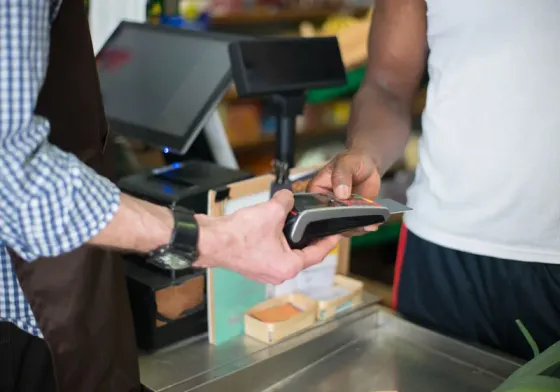















If you pull your pay a few days early through an app, you know the screen at the end. The one that suggests a tip.
In Maryland, that screen is gone on October 1. Everywhere else it stays, and it’s worth knowing what you’ve been leaving on it.
The state that bothered to count says the answer averaged more than $280 a user.
Maryland ran a market inquiry in 2024 and added up what these apps collect. Between 2019 and 2024, Maryland residents paid over $35 million in fees across 5.5 million transactions. The state’s Department of Labor calls the tip screen “dark-pattern pricing,” where “manipulative app designs pressure consumers of limited means into paying hidden fees disguised as tips.”
That’s a state regulator describing a suggested-tip button. Read it twice.
Governor Wes Moore signed Senate Bill 94 on April 28, 2026. Maryland’s old rule was the industry’s preferred compromise: ask for a tip all you like, just disclose who gets it and set the default at zero. The new text does not compromise. A lender “may not accept a tip from a consumer or give a consumer the option to provide a tip.” If one lands anyway, the company has seven days to send it back. It used to have thirty. And the app has to post a notice saying it is prohibited from taking your money that way.
Now do the division. Thirty-five million dollars across 5.5 million advances is about $6.40 a transaction. Sounds like nothing.
It isn’t nothing, because of how these get used. The CFPB studied the employer-partnered corner of this market and found the average advance was $106 and the average worker took 27 of them in a year. Two a month, every month. Charge a few dollars on $106 and take it back out of the next paycheck, and you haven’t paid a fee. You’ve paid a rate. The CFPB put an illustrative APR on a typical transaction at 109.5%. Run your own version on our loan calculator.
Dumb math, and the app is betting you never annualize it.
Do this now. Open the app and find your transaction history. Add up twelve months of tips and instant-transfer fees. That total is the real price of the product, and almost nobody knows theirs.
Then set the tip to zero and leave it there. If the app charges to move money instantly, take the free transfer and wait the day. The CFPB found expedited transfer fees were 96.61% of all fee revenue in the employer-partnered market. That’s the business. The tip is the garnish.
The rest of SB 94 matters too, if you live in Maryland. Providers there can’t report your nonpayment to a credit bureau, can’t pull your credit report to qualify you, can’t charge interest, and can’t sue you, hire a collector, or sell the debt. If their repayment attempt overdrafts your account, they owe you the bank’s fee back within five business days.
Outside Maryland, none of that protects you. The arithmetic still travels. If you’re bridging the same gap every month, the advance isn’t fixing it, and comparing real loan options beats paying 109% in $6 slices.
How Candid Yak makes money. Some of the products we write about pay us if you apply or sign up through our links. That never changes our verdict, our rankings, or the numbers in this article. We call a bad deal a bad deal whether it pays us or not. Some brands shown in our comparison tools are placeholder examples while we finalize partner agreements, and we label them as such.
Sources
- Maryland Senate Bill 94 (2026 Regular Session), Commercial Law - Earned Wage Access - Revisions, Chapter 170
- Maryland SB 94 enacted bill text (Maryland General Assembly)
- Maryland Delivers Major Wins for Consumers as Gov. Moore Signs Earned Wage Access and Access to Banking Bills (Maryland Department of Labor, April 28, 2026)
- Data Spotlight: Developments in the Paycheck Advance Market (CFPB, July 18, 2024)